Tank or Tankless Water Heater: Which Fits Your Home?
Both can serve a household well, and the right pick depends on how your family uses hot water and what your home can support.
October 1, 2026 · 4 min read
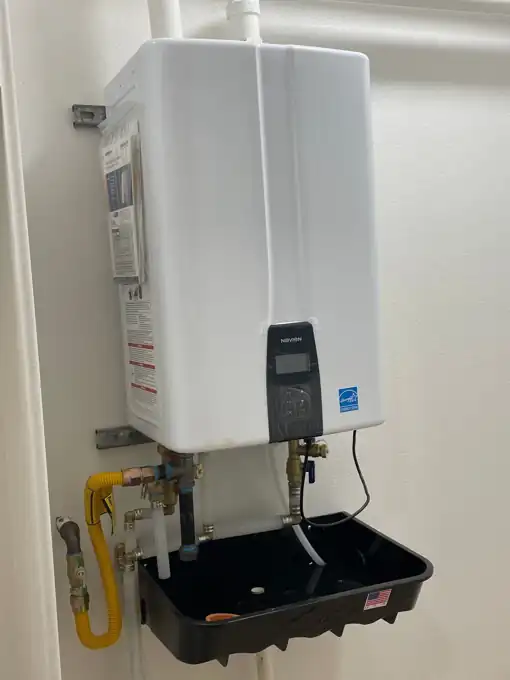
A water heater is one of those appliances nobody thinks about until the morning the shower runs cold. When it is time to replace one, the first question is usually whether to stay with a tank or move to a tankless unit. There is no single right answer. It depends on your household, your fuel, and the room and plumbing you have to work with. Here is a plain look at both choices for homes in Springdale, Fayetteville, Rogers and the rest of Northwest Arkansas.
How a tank water heater works
A tank heater stores a set amount of hot water and keeps it warm around the clock. When you open a hot tap, the water leaves the top of the tank and cold water refills it from the bottom. The setup is familiar, widely understood, and usually the simpler of the two to install in a home that already has a tank in place.
The tradeoff is that the supply is limited. A long shower after a full day of laundry and dishes can run the tank down, and then you wait while it heats a fresh batch. A tank also spends energy keeping a full volume hot while no one is using it.
How a tankless water heater works
A tankless heater has no storage. When you open a hot tap, water runs through the unit, a burner or heating element warms it on the way past, and it leaves hot. When the tap closes, the heater stops. Masters of Disasters describes tankless systems this way: they “provide endless hot water and are significantly more energy efficient than traditional tank models.”
Tankless units come with a few practical points worth knowing. Each unit can only heat so much water at once, so a large household running several showers and a dishwasher together needs a unit sized for that load. Gas models also need adequate gas supply and proper venting, so a swap sometimes means work on the gas line or the vent path as well as the heater itself. A wall-hung unit frees up floor space, which is a real plus in a tight utility closet.
Fuel matters: gas, propane, electric and power vent
Masters of Disasters services gas, tankless, propane, electric and power vent systems, so the fuel you have is usually not a barrier. Here is how the main types differ:
- Natural gas: a common choice where gas service is already run to the house. It needs a gas line and a vent for the exhaust.
- Propane: the same idea as natural gas for homes that use a propane tank, which is common outside the towns.
- Electric: no flue or exhaust is needed, but the unit needs enough electrical capacity from the panel to run.
- Power vent: a gas heater with a fan that pushes exhaust out through a pipe, which gives more flexibility in where the heater can sit and how it vents.
If you are changing fuel types, or moving from a tank to a tankless unit, ask whether the gas line, the vent, or the electrical supply will need changes. That is the part that surprises homeowners most.
Which one suits your household
- A tank can suit smaller households, tight scope, and homes where the existing setup is simple and works.
- Tankless suits households that run out of hot water, want to reclaim floor space, or want the efficiency gains Masters of Disasters points to.
- Large families should talk through peak demand first, since several fixtures running at once is what a tankless unit has to be sized for.
- If you plan to stay in the home a long time, think about the setup that will suit it later, not only today.
Neither type is a bad choice on its own merits. The mistake is choosing without looking at the home. A good contractor will ask how many people live in the house, when they shower, what else uses hot water, and what the existing gas, electrical and venting look like, then recommend from there.
Flushes keep either type working
Whichever you pick, minerals in the water slowly build up inside the heater. In a tank, sediment settles at the bottom and can make the unit noisy and less efficient. In a tankless unit, scale can coat the parts that heat the water. A system flush clears that buildup out. Masters of Disasters lists system flushes for improved performance among its water heater services.
Signs it is time to replace
- Water pooling at the base of a tank heater
- Rust-colored hot water
- Rumbling, popping or banging sounds from the tank
- Hot water that runs out quickly or swings in temperature
- A heater that keeps needing repairs
Water at the base of a tank usually means the tank itself has failed, and that is a replacement rather than a repair. If you see it, shut off the water supply to the heater and call. Beyond that, the other signs give you time to compare options instead of rushing.
Planning the changeout
Masters of Disasters handles water heater repair, replacement and installation, along with energy-efficient upgrades, and offers free estimates on water heater work. One customer, Susan Billimek, wrote about getting a water heater replacement along with a sink leak repair and a shower faucet swap from the same crew, saying “I paid exactly what they quoted.”
Masters of Disasters offers free estimates on water heater changeouts; call (479) 659-5002. The Water Heater Changeouts page on this site lists the service in full, and the crew works from Springdale across the region.
Masters of Disasters Leak Detection, Plumbing & Air, (479) 659-5002
Call (479) 659-5002