9 Signs of a Hidden Water Leak in Your Home
Most leaks give clues long before they give puddles, if you know what to look for.
October 1, 2026 · 4 min read
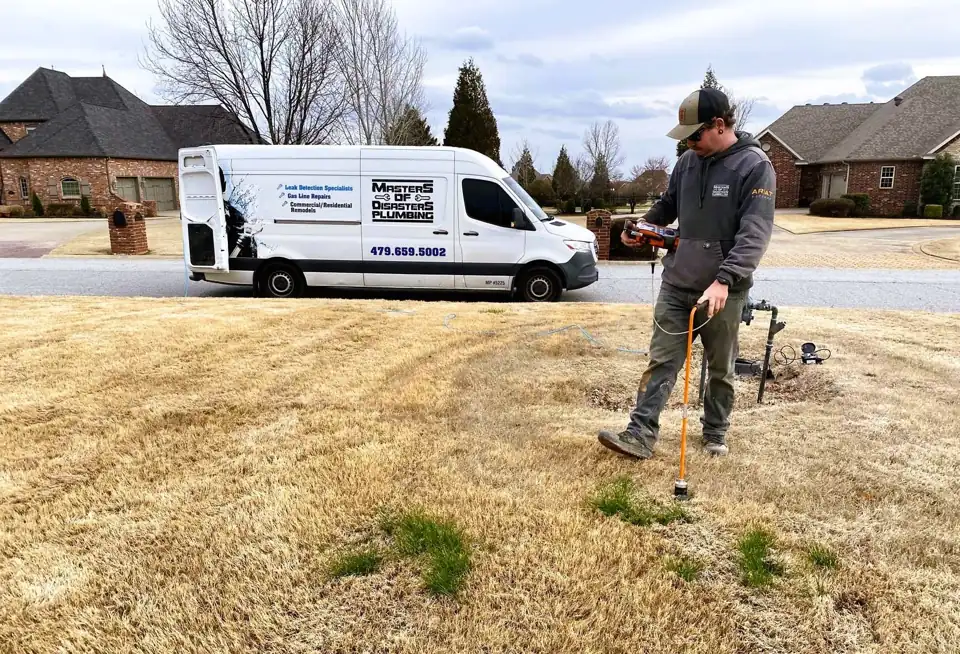
Not every leak announces itself with a puddle. Plenty of them sit behind a wall, under a slab, or in the ground between the meter and the house, and they can run for a long time before anything obvious shows up. If you live in Springdale or anywhere around Northwest Arkansas, these are the nine warning signs Masters of Disasters tells homeowners to watch for, what each one usually points to, and when it is time to pick up the phone.
1. A higher water bill or a notice from your water provider
If your usage climbs and nobody in the house has changed their habits, water is going somewhere. Some utilities send a notice when consumption looks unusual, and that notice deserves to be taken seriously. A steady, unexplained rise most often points to a leak that runs around the clock, such as a failing service line, a toilet that keeps refilling, or a fitting inside a wall.
2. Decreased water pressure
A drop in pressure at one faucet is usually local, like a clogged aerator or a worn cartridge. A drop across the whole house is a different story. It can mean a break in the line coming into the house, a failing valve, or buildup inside old pipes. If the whole house has gone weak and the bill is climbing at the same time, treat that combination as a strong hint of a leak on the supply side.
3. The presence of mold or mildew
Mold needs moisture. A musty smell, dark spots in a corner, or growth under a sink with no obvious source suggests water is reaching that spot regularly. A bathroom with a good fan can still grow mildew, but a bedroom wall or a closet that smells damp is another matter. Cleaning the mold without finding the water only brings it back.
4. Water stains on walls or ceilings
Brown or yellow rings on a ceiling, or a stain that slowly spreads on a wall, mean water has been soaking drywall. Water travels along framing and pipes before it shows, so the stain is often not directly under the leak. A ring that grows after rain points toward the roof. A stain below a bathroom or laundry room points toward the plumbing above it. A stain that keeps growing when no one has used water upstairs is worth a call.
5. Peeling or blistering paint
Paint blisters when moisture pushes from behind it. If you see bubbling or peeling on an interior wall that is nowhere near a shower, moisture inside the wall is a likely cause. Scraping and repainting hides the problem for a while, but it does not stop the water, and the new paint will fail the same way.
6. Warped floors or sagging ceilings
Hardwood that cups, laminate that lifts at the seams, and tile that loosens are all ways floors react to moisture from below. A sagging ceiling is the more urgent version, because drywall holding water is heavy and can give way. If a ceiling is sagging, keep people out from under it and shut off the water. That is a same-day situation, not a wait-and-see one.
7. Soggy spots or unusually green areas in your yard
A patch of lawn that stays wet in dry weather, or a stripe of grass greener than the rest, can mean a line leaking underground and feeding the turf. Sunken ground, a mushy spot near the meter, or a damp track running toward the house are all clues. A broken line in the ground is exactly what electronic listening gear and a camera are meant to locate before anyone brings out a shovel.
8. Water pooling or surfacing in your home
Water showing up where it should not, around a toilet base, at the bottom of a wall, or seeping up through a floor, is a leak you can see even if the source stays hidden. Pooling near a slab edge or a floor drain with no spill to explain it deserves attention that day. If the water keeps coming, shut off the main.
9. The sound of dripping water
Quiet houses tell on themselves. A drip, a hiss, or a faint running sound at night, when everything is off, is a leak until proven otherwise. A hiss inside a wall can be a pressurized supply line with a pinhole in it. Try to note where the sound is loudest and whether it changes when you turn a fixture on or off. That detail helps whoever comes out to find it.
How the leak actually gets found
Masters of Disasters describes its leak detection as electronic leak detection that works behind walls and under slabs without tearing them open, backed by camera inspections and water pressure testing. The goal is to locate the exact spot, so any opening up is small and planned instead of a search through your house. For leaks in a yard, the same thinking applies: find it first, then dig only where the evidence points.
When to call
One sign on its own might have a simple answer. Two or three together, or any single sign that keeps getting worse, is the moment to stop guessing. Leaks do not repair themselves, and waiting only gives the water more time to rot wood and feed mold.
Masters of Disasters offers a free leak evaluation; call (479) 659-5002. See the Water Leak Detection & Repair page on this site for how the crew works, or ask about leak detection in Bella Vista if that is where you live.
Masters of Disasters Leak Detection, Plumbing & Air, (479) 659-5002
Call (479) 659-5002More articles
What to Do If You Notice a Leak in Your Home
Eight steps to take, in order, the moment you find water where it should not be.
When Your Water Line Needs Replacing: Meter to House
The pipe you never see can fail quietly, and replacing it is a bigger project than most homeowners expect.